You have spent years perfecting your SEO strategy. You rank on page one. Your backlink profile is strong. Your content is keyword-optimised and comprehensive.
And yet, when someone asks ChatGPT “Which AI solution provider in Malaysia should I consider?” — your business is nowhere in the answer.
Welcome to the new reality of digital discovery. Traditional search is dying. And if your brand is not optimised for Generative Engine Optimization (GEO), you are invisible to the fastest-growing segment of your potential customers.
The Problem: Your SEO Strategy Is No Longer Enough
For two decades, the rules were simple. You targeted keywords. You built backlinks. Google sent you traffic. That era is over.
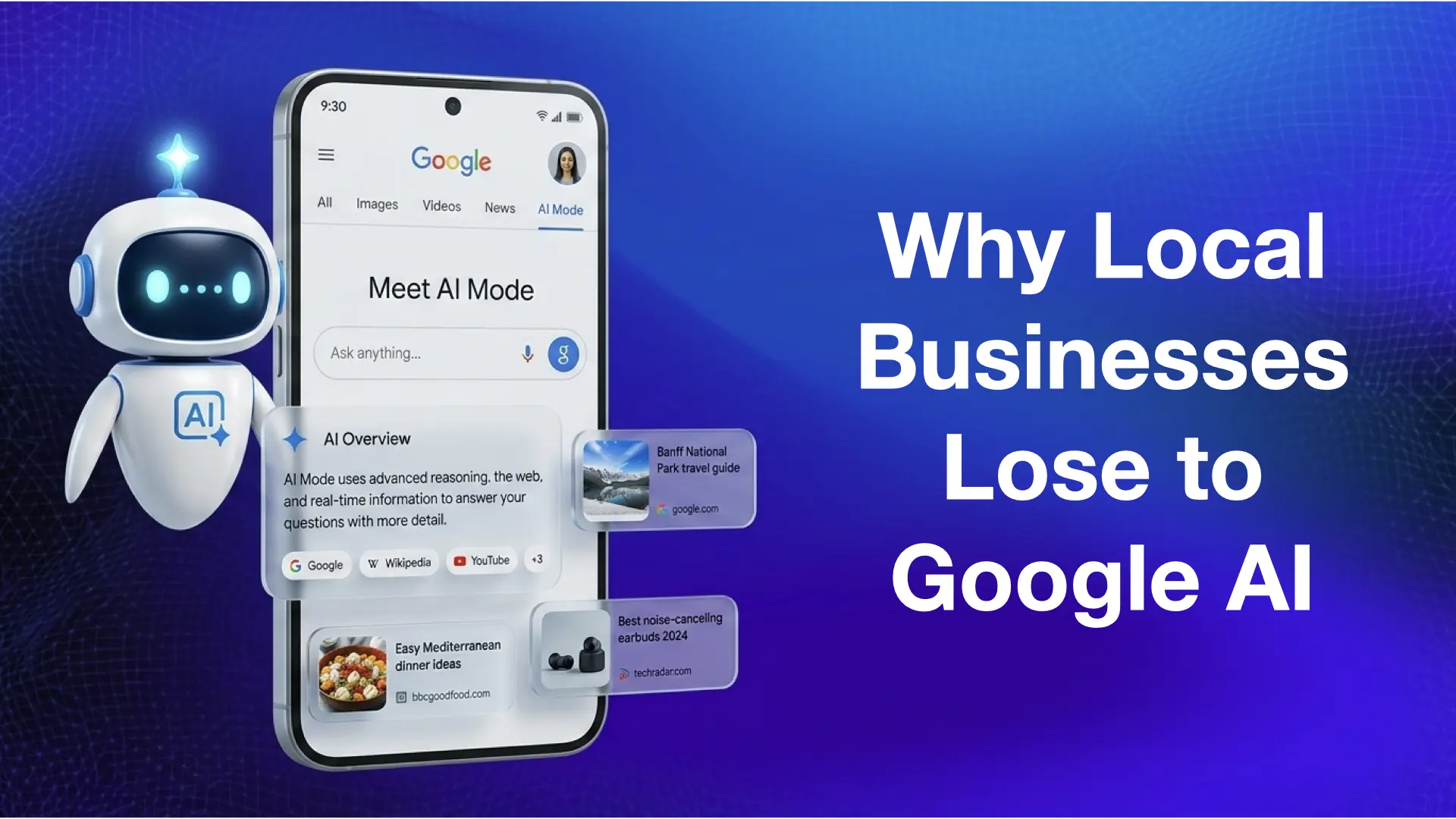
Google’s AI Overviews and Search Generative Experience (SGE) have replaced up to 50 percent of organic traffic with zero-click answers. Your brand is no longer competing for a click — you are competing for a citation.
The numbers are stark. According to Gartner, 35% of Gen Z now use AI tools as their first stop for research questions, compared to just 19% for millennials. ChatGPT alone processes more than 1.7 billion visits per month — traffic that might have previously gone through traditional search. Perplexity.ai processes over 10 million unique queries daily.
Technical searches, factual queries, and how-to content are migrating rapidly to AI platforms. People who used to spend 15–20 minutes reading multiple articles now get a synthesised answer from AI in under five minutes.
If you are still optimising only for Google rankings, you are optimising for a shrinking slice of the discovery pie.
What Is Generative Engine Optimization (GEO)?
Generative Engine Optimization is the multi-disciplinary science of optimising digital content to be cited, summarised, and recommended by AI-driven search engines — including ChatGPT, Gemini, Perplexity, Claude, and Google AI Overviews.
Where traditional SEO asks “will this page rank?”, GEO asks “will an AI engine quote this — accurately, and attributed to us?”
The difference is fundamental:
| Traditional SEO | Generative Engine Optimization (GEO) | |
|---|---|---|
| Goal | Rank a page in a list of links | Get cited inside an AI-generated answer |
| Surface | Blue-link results pages | AI Overviews, ChatGPT, Perplexity, Gemini |
| Unit of success | Position 1–10 | Inclusion + attribution in the answer |
| What the engine rewards | Keywords, backlinks, page authority | Clear claims, structure, extractable answers, source authority |
Traditional search engines were retrieval systems that looked for matching strings of text. Generative engines are understanding systems. They look for entities — concepts that the machine understands as distinct objects with specific properties and relationships.
GEO is the process of structuring your data so that these machines can easily parse your authority. If you are not practising GEO, you are invisible to the AI.
Why GEO Matters Right Now for Malaysian and Singaporean Businesses
The opportunity is urgent — and the gap is widening.
A 2026 audit of Singapore SME websites found that 26% of brands have zero AI mentions. More than a quarter of businesses in the region are completely invisible to AI search engines.
Even more concerning: according to Semrush’s 2026 AI Visibility Index, which analysed 126 million AI search prompts, only 36 global brands maintained top-100 visibility across all four major AI platforms during every month of the study. In the News and Media category, the three most visible brands accounted for 82.9% of total category visibility.
The market is concentrating fast. The brands at the top of category citation rankings are extending their lead — while challengers without active GEO programs are losing ground. AI visibility is not a one-time investment — citation decay is real and measurable, with brands that paused structured-content investment experiencing citation share loss within months.
The Malaysian GEO services market is scaling rapidly — from an estimated US$6–10 million in 2025 to US$14–20 million in 2026, with projections reaching US$32–45 million as adoption accelerates. This is not a trend. This is a structural shift.
How Each AI Engine Chooses What to Cite
One of the most important findings in GEO research is this: AI engines do not cite the same sources.
Yext analysed 17.2 million AI citations across ChatGPT, Perplexity, Gemini, and Claude. Their conclusion: while all four models differ, AI visibility depends on retrieval logic — not just content quality. Verified, structured, directly distributed data accounted for 54.53% of distinct citation sources.
Here is how each major engine behaves:
ChatGPT
ChatGPT’s citation behaviour splits by mode. In base mode (roughly 60% of queries), the model answers from its training data and produces no real citations. In browsing mode, ChatGPT queries Bing and retrieves 20–30 candidate pages, selecting 3–6 for inline citation. A Seer Interactive study found that 87% of SearchGPT citations matched Bing’s top 10 organic results.
The implication: If you are not in Bing’s top 10, you are largely not in ChatGPT’s citation pool. ChatGPT also heavily favours Wikipedia (47.9% of top-10 cited sources) and encyclopedic sources.
Perplexity
Perplexity operates like a search engine that answers the question directly. Its citation patterns are stable across industries, pulling from a mix of official websites and directories. Perplexity strongly favours primary sources and rewards content refreshed within 12 months at 3.2 times the rate of stale content. Reddit is the No. 1 source across every major engine, near 40% frequency, and 46.7% of Perplexity’s top citations.
The implication: Fresh, timely content and community presence matter enormously for Perplexity visibility.
Gemini
Gemini is heavily grounded in Google’s search index. It behaves somewhat similarly to traditional search, frequently citing official brand websites and established sources. Gemini is the most diversified engine — it draws only 5.7% of citations from media, compared to ChatGPT’s 15.4%. When a brand appears in a Gemini answer, it is named in the text 83.7% of the time — but cited as a source only 21.4% of the time.
The implication: Gemini acts like a conversationalist, drawing on what it already knows. Strong first-party content and robust Google Business Profiles matter significantly.
The Ghost Citation Problem: Being Cited ≠ Being Seen
Here is a critical insight that most businesses miss.
Semrush partnered with Kevin Indig to analyse thousands of domain appearances across AI search engines. They found that 62% of AI citations are “ghost citations” — your site gets a source link, but the AI never says your brand name in the answer.
In other words: citation rate is nearly double the mention rate. Your content might be used as a source, but your brand remains invisible to the user.
This is why GEO is not just about technical optimisation. It is about brand recognition within the answer itself. You need to earn both the citation and the mention.
Your 3-Layer GEO Strategy for 2026
Based on the research and data above, here is a practical framework to get your Malaysian or Singaporean business cited by ChatGPT, Gemini, and Perplexity.
Layer 1: Technical Foundation
Implement structured data. JSON-LD for FAQPage, Article, and Product schemas is the foundation of AI citation. Schema markup is now table-stakes — its absence is a critical gap.
Optimise for extractability. Place a 40-60 word direct answer at the start of every page. Pages with answer capsules at the opening receive AI citations at a rate 40% higher than those without. Use question-based H2s and H3s that mirror how people actually ask questions.
Publish an llms.txt file and keep it current. Allow OAI-SearchBot in your robots.txt.
Layer 2: Content That Gets Cited
Write answer-first content. Use definitive statements, not hedging. Specific, self-contained statements travel better than hedged prose, because the engine lifts them out of context.
Cite credible sources. The most effective single technique for getting cited by AI was citing credible sources, which produced a 115.1% improvement. Original research, case studies, and clearly attributed author credentials give your content a decisive advantage.
Build topical authority. Comprehensive, in-depth content that covers a topic thoroughly performs better in Deep Research mode, which pulls from dozens to hundreds of sources per query.
Layer 3: Off-Site Signals
Earn media coverage. Earned media remains the single strongest GEO signal. Brands with active earned media programs across high-authority publications capture citation share that paid media alone cannot buy.
Build community presence. Reddit is a disproportionately influential source. Brands with strong Reddit visibility consistently outperform competitors who rely solely on owned-content marketing.
Get mentioned on cited articles. A single brand mention on the right cited article can move your visibility more than weeks of technical tweaks. Structured listicle mentions on pages already pulled into AI search do more heavy lifting than a pile of plain links.
Who is JustSimple.AI?
At JustSimple.AI, we are a Malaysian AI Automation Agency dedicated to helping businesses navigate and thrive in this new era. We understand the unique challenges and opportunities of the local market, including considerations like regional search intent and the nuances of the Singaporean and Malaysian consumer base.
We don’t just offer generic tools; we offer transformation. Our team of experts helps you build and deploy these intelligent, semantic workflows, moving you from manual, outdated SEO practices to an optimized, revenue-focused system. We cut through the technical jargon and focus on one thing: getting your business found by both humans and AI models.
Your Next Step
The shift from search rankings to AI citations is not coming — it is already here. And the gap between the brands that understand this and the brands that do not is widening every day.
At justsimple.ai, we help Malaysian and Singaporean businesses navigate this new landscape. We understand that you need more than just theory — you need to know where you stand today and what to do about it.
Start by understanding your current position. Our Free AI Visibility Evaluation Tool gives you a comprehensive assessment of how visible your brand is across ChatGPT, Gemini, and Perplexity — and how you compare to your competitors. You will see exactly where you have AI citations, where you have ghost citations, and where you are completely invisible.
Not sure where to start? Book your free consultancy session with our team. We will audit your current AI visibility, identify your highest-yield opportunities, and build a practical GEO roadmap tailored to your business and market.
The brands that win in the AI search era will not be the ones with the most content. They will be the ones whose content AI engines trust, cite, and name. The question is: will your brand be one of them?